
Whale Watching Guide: What You Are Actually Seeing on the Water

Many people go whale watching hoping to see a whale leap fully out of the water. That can happen, and it is unforgettable when it does. But real whale watching is often quieter than that.
Most of the time, you are watching for small signs: a misty blow, a dark back, a dorsal fin, a tail fluke, a smooth patch of water, or birds gathering over food. These moments may last only a few seconds, but they are real whale behavior.
Whales spend most of their lives underwater. What we see from a boat or shoreline is only a tiny part of their day. Once you understand what those small surface moments mean, whale watching becomes much more exciting.
1. A Whale Blow


A blow, also called a spout, is often the first sign of a whale. It looks like a puff of mist or spray rising from the water.
Whales are mammals, so they need to come to the surface to breathe. When a whale exhales, warm air from its lungs meets cooler ocean air and creates a visible mist. That is the blow.
The blow can help guides spot whales from far away. It can also help identify the species. A humpback blow may look tall and column-shaped. A gray whale blow can look lower or heart-shaped. Orca blows may look smaller and bushier.
What it means:
The whale has surfaced to breathe.
How to watch:
If you see a blow, keep looking in the same general area. The whale may surface several times before diving deeper.
2. A Dark Back


Sometimes the main thing you see is not a tail or a jump. It is just a dark back rolling through the water.
This is normal. A whale often surfaces by lifting part of its back above the water, breathing, then slipping under again. The back may look like a smooth dark curve. On a humpback, you may see a rounded back followed by a small dorsal fin. On a gray whale, the back may look mottled and lower, with bumps instead of a tall fin.
What it means:
The whale is surfacing, breathing, or traveling.
How to watch:
Do not look only for a full whale shape. Watch for curved movement, dark water, and a slow rolling motion.
3. A Dorsal Fin

The dorsal fin is the fin on a whale’s back. It is one of the easiest clues for identifying some species.
Orcas have the most obvious dorsal fins. Male orcas can have very tall, straight fins, while females and younger orcas have smaller, more curved fins. Humpbacks have a smaller dorsal fin that appears after the rounded back. Gray whales do not have a tall dorsal fin. Instead, they have a low ridge and small bumps along the back.
What it means:
The whale is swimming near the surface.
How to watch:
Notice the shape, size, and movement of the fin. A tall black fin moving with purpose may suggest an orca. A small fin after a rounded back may suggest a humpback.
4. A Tail Fluke

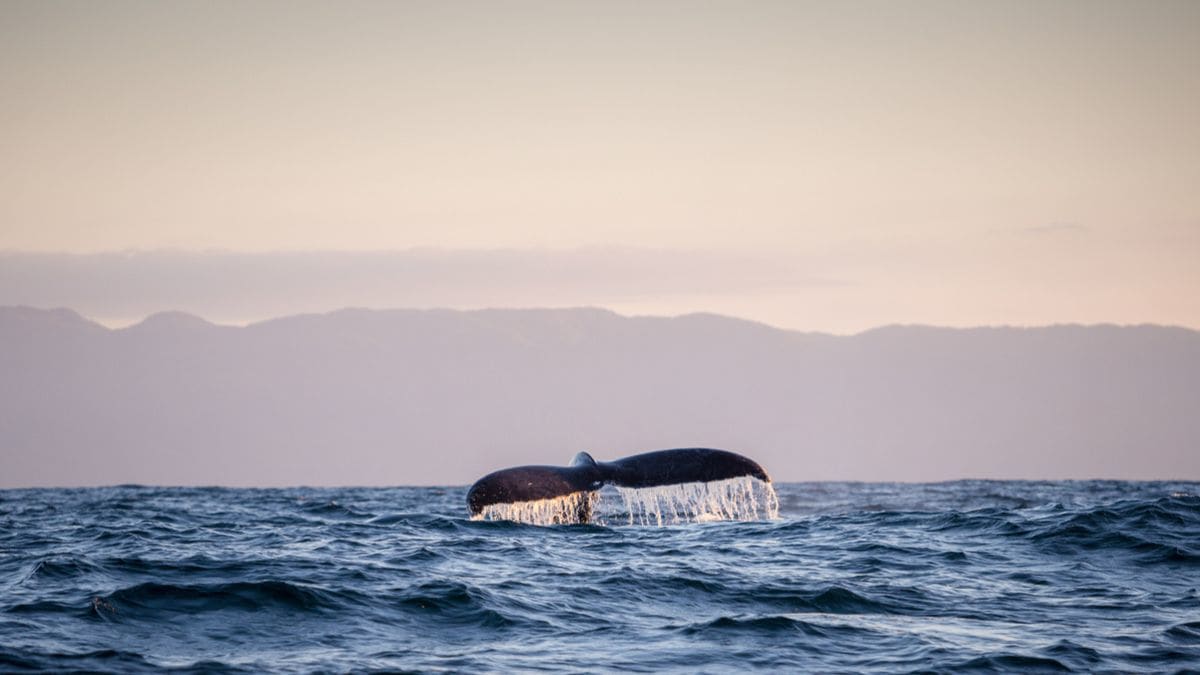
A tail fluke is one of the most exciting common whale-watching sights. The fluke is the two-lobed tail at the end of the whale’s body.
You often see a fluke when a whale is about to dive deeper. Humpbacks are especially known for lifting their flukes before a deep dive. This creates a beautiful photo moment, but it also tells you the whale may disappear for several minutes.
Gray whales may also show tail movement, but they are often lower-profile at the surface than humpbacks.
What it means:
The whale is diving deeper.
How to watch:
When you see a fluke, remember the location. The whale may come back up nearby, but not always right away.
5. A Breach


A breach is the classic whale jump. The whale launches part or most of its body out of the water and lands with a huge splash.
This is the moment many visitors dream about. It is dramatic, loud, and unforgettable. But it is also not guaranteed. You can have a very good whale watching trip without seeing a breach.
Whales may breach for different reasons. It may be linked to communication, play, social behavior, body movement, or removing parasites, but there is no single reason that explains every breach.
What it means:
The whale is showing active surface behavior, but the exact reason can vary.
How to watch:
If one breach happens, keep watching. Sometimes a whale may breach more than once, but it may also stop after a single jump.
6. A Tail Slap

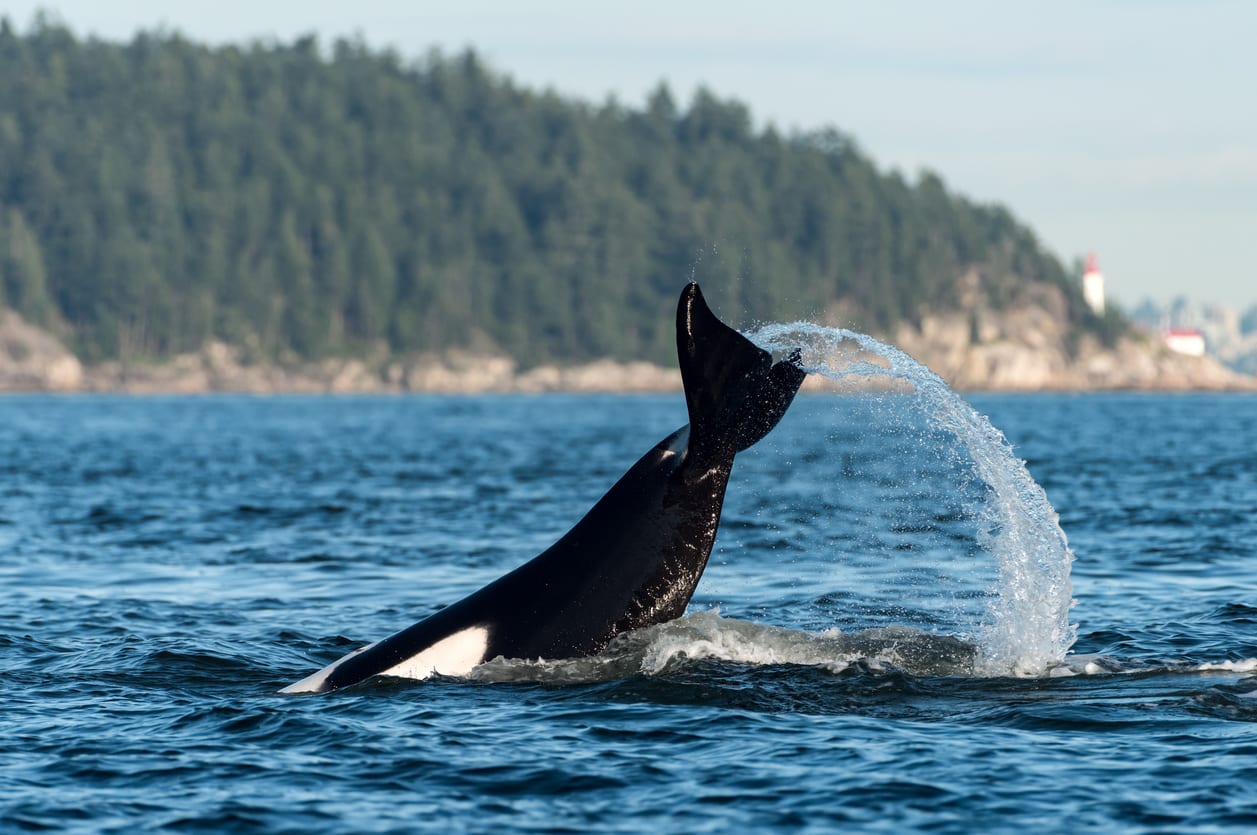
A tail slap happens when a whale lifts its tail and hits the water. It can make a loud sound and a large splash.
This is different from a fluke-up dive. In a tail slap, the whale is actively striking the water’s surface. Humpbacks are often seen doing this, but other whales may also show tail-slapping behavior.
What it means:
It may be communication, feeding behavior, social behavior, or a sign of irritation. The meaning depends on the situation.
How to watch:
Look for repeated slaps. Repeated surface activity can suggest the whale is interacting with other whales, responding to something nearby, or working around food.
7. A Pectoral Fin Slap
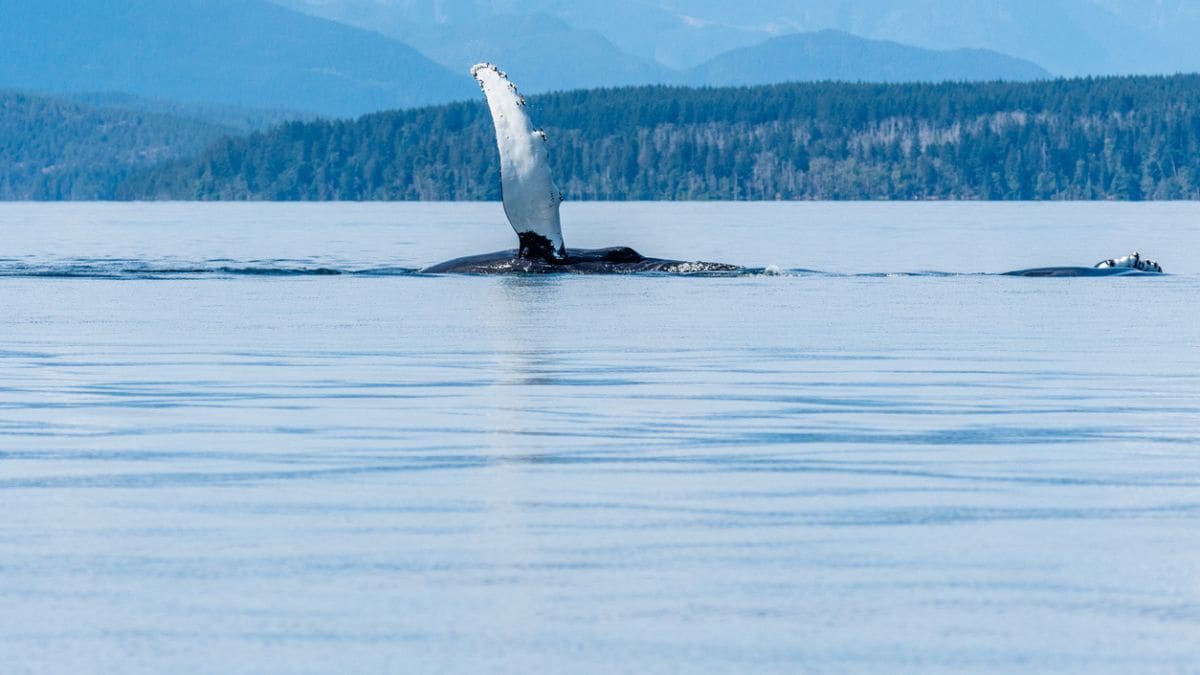
Pectoral fins are the long side fins of a whale. Humpbacks have especially long pectoral fins, which can make this behavior easier to notice.
A pectoral fin slap happens when a whale rolls slightly and hits the water with one of its side fins. You may see a long white or pale fin flash above the water before it lands.
What it means:
It may be social behavior, communication, or part of active surface movement.
How to watch:
Watch for repeated white flashes on the surface, especially around humpbacks.
8. A Spyhop

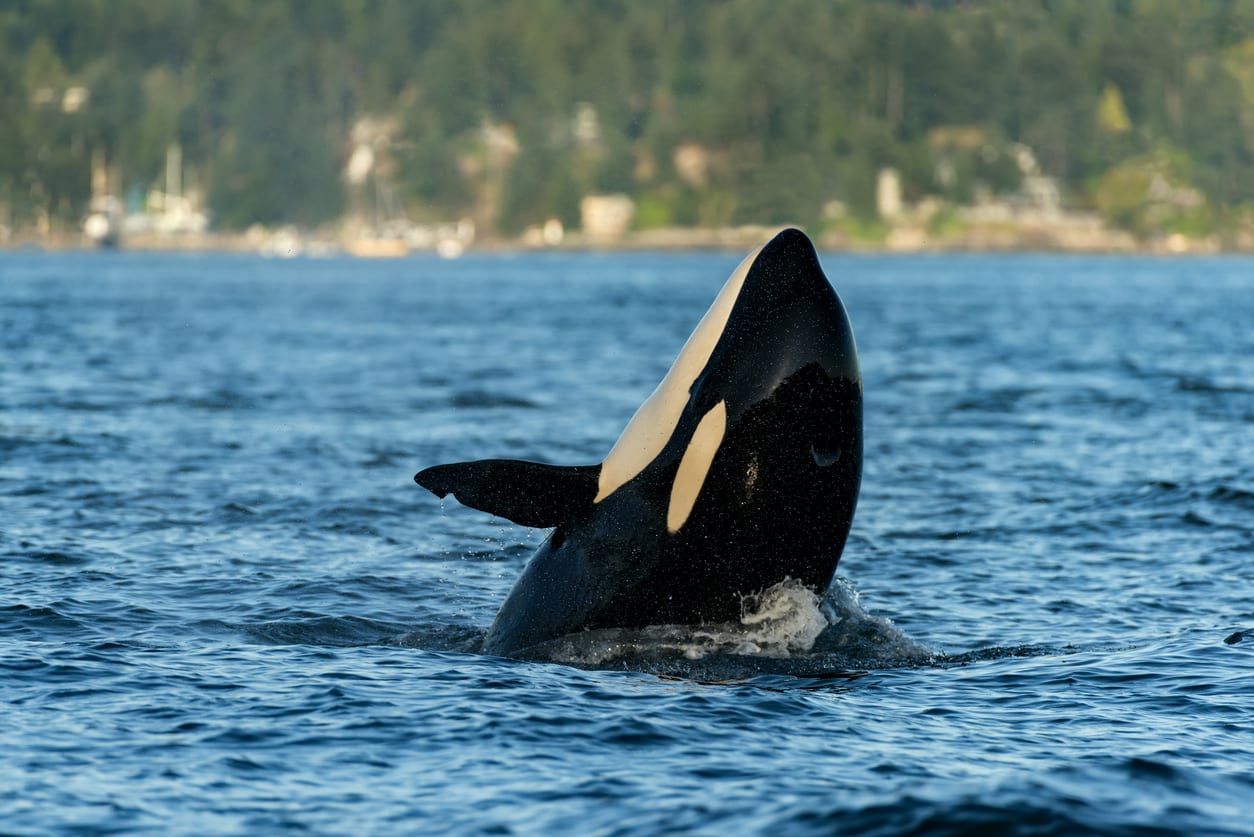
A spyhop happens when a whale lifts its head vertically out of the water, almost as if it is looking around.
This is one of the most charming whale behaviors to see. Orcas and gray whales may spyhop, and other whales can do it too. It gives the impression that the whale is checking what is above the surface.
What it means:
The whale may be looking around or checking its surroundings.
How to watch:
Look for a head rising straight up, holding for a moment, then sinking back down.
9. Feeding Behavior
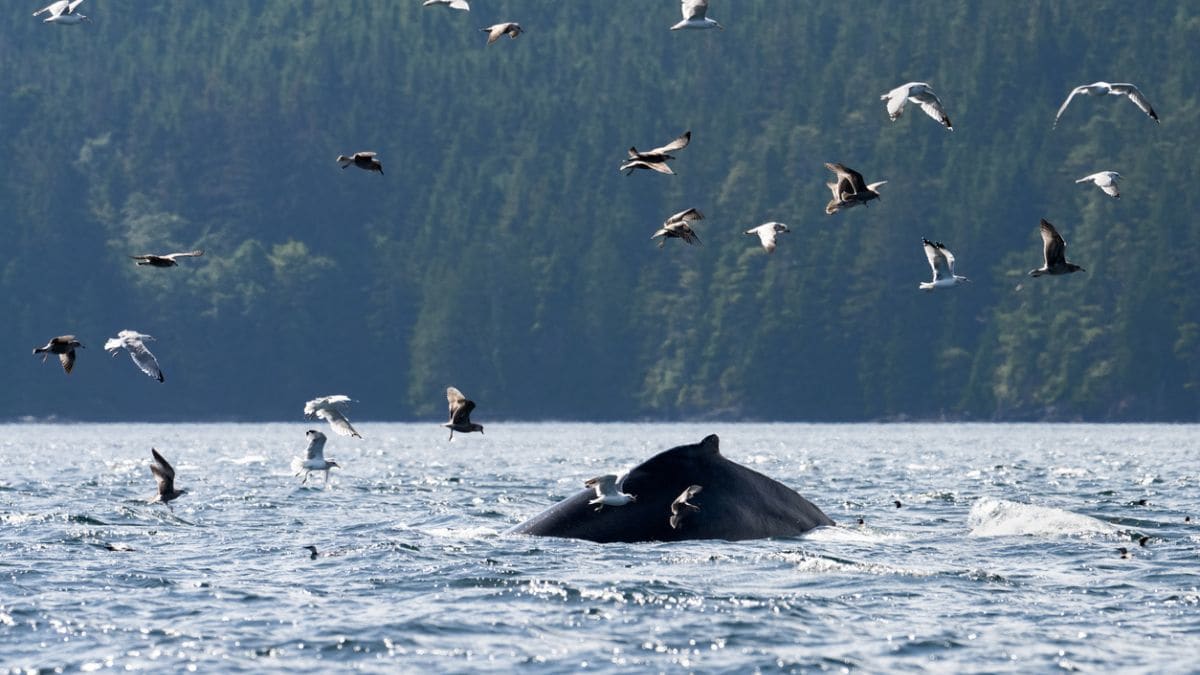
Feeding can be one of the most meaningful things to see on a whale watching tour. It may not always look dramatic at first, but it tells you the whale has found food.
Feeding behavior can look like:
Whales surfacing repeatedly in the same area
Birds gathering and diving
Sea lions or seals active nearby
Humpbacks circling or diving often
A whale opening its mouth near the surface
Tail flukes followed by deeper dives
Sudden surface movement around baitfish
Humpbacks may feed on small fish and krill-like prey. Gray whales may feed closer to the bottom or in shallower coastal areas. Orcas hunt, so their feeding behavior can look faster and more directional.
What it means:
The whale is using the area to find or capture food.
How to watch:
Watch the whole scene, not just the whale. Birds, baitfish, sea lions, and repeated dives can all be part of the feeding story.
10. A Smooth Patch on the Water
Sometimes after a whale dives, you may see a smooth oval patch on the water. This is often called a flukeprint.
It forms after the whale moves its tail underwater and changes the surface texture. It may look like a calm, glassy footprint on the ocean.
What it means:
A whale recently moved or dove in that spot.
How to watch:
If you see a smooth patch after a dive, keep watching nearby. It can help you understand where the whale went under.
11. Birds Gathering Above the Water

Birds can be one of the best clues on a whale watching trip. If gulls, murres, cormorants, or other seabirds are circling or diving, there may be small fish near the surface.
Where there is food, there may also be whales, sea lions, seals, or other marine wildlife.
What it means:
Food may be near the surface, and larger animals may be feeding nearby.
How to watch:
Scan below active birds. Guides often pay attention to bird activity when searching for wildlife.
How to Get Better at Spotting Whales
Whale watching gets easier when you know how to look.
Scan slowly across the horizon.
Look for misty blows, not just full whale bodies.
Watch for dark shapes rolling through the water.
Keep looking where you saw the first blow.
Notice bird activity and splashes.
Use binoculars, but also scan with your eyes.
Listen to your guide’s directions.
Watch in patterns, not single moments.
Be patient after a fluke because the whale may stay down for several minutes.
Do not expect constant action.
The best whale watchers are patient. They notice small changes on the water.
Tips for Taking Photos of Whale Moments
Whale photography can be tricky because sightings happen quickly.
Keep your camera ready before the whale surfaces.
Use burst mode if your phone or camera has it.
Do not zoom too much or you may lose the whale.
Focus on the area where the whale last surfaced.
Try to include water, coastline, or birds for context.
Take photos of blows, backs, flukes, and sea lions too.
Do not spend the whole tour looking through a screen.
Sometimes the best memory is not the best photo. Watch with your eyes too.
Final Thoughts
Whale watching becomes more rewarding when you stop waiting only for a breach and start reading the water.
A misty blow tells you a whale is breathing. A dark back shows it moving through the surface. A dorsal fin gives you a clue about the species. A tail fluke means it is diving deeper. Birds, splashes, and smooth water can all tell part of the story.
The ocean does not always give you a dramatic show, but it often gives you clues. Once you learn to notice them, even a few seconds with a whale can feel unforgettable.