
Best Time for Whale Watching in Ucluelet
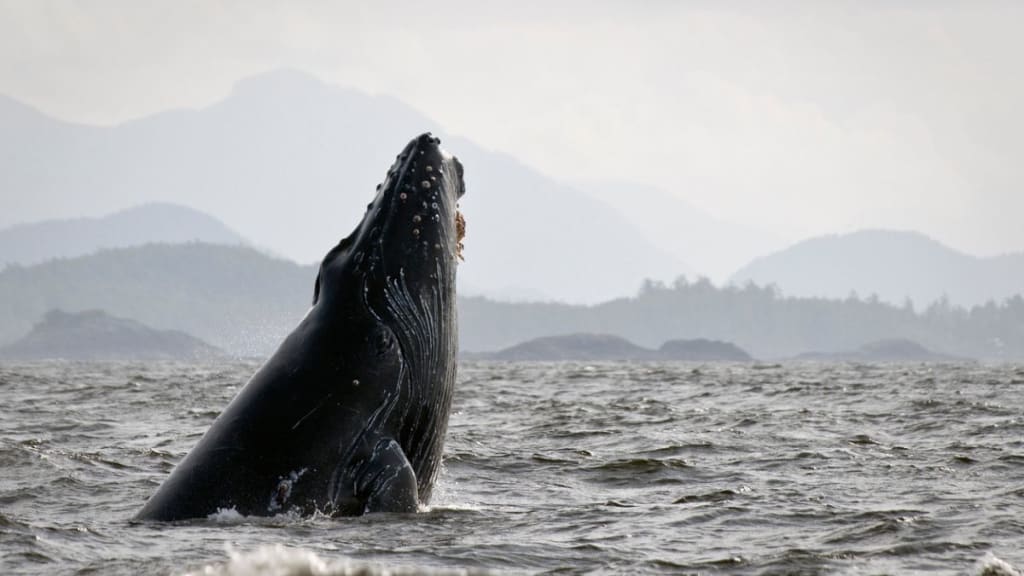
Why Ucluelet Is Great for Whale Watching
Ucluelet is a strong whale watching destination because it sits beside some of the richest marine waters on Vancouver Island’s west coast.
From the harbour, tours can head toward Barkley Sound, the Broken Group Islands, and the open Pacific, where whales often travel, feed, and surface.
The main draw is the seasonal movement of whales. In spring, gray whales pass near the coast during their northbound migration.
As the season moves into summer and early fall, humpback whales become a major highlight, often feeding in nearby waters. Orcas may also appear, but they are less predictable and are usually seen when they are moving through the area.
A whale watching trip from Ucluelet also gives visitors more than a chance to see whales. The journey may include rocky islands, kelp beds, sea lion haulouts, seals in the water, bald eagles in the trees, and seabirds moving across the waves.
That mix of whales, wildlife, and rugged coastal scenery is what makes Ucluelet such a memorable whale watching destination. It feels wild, quiet, and connected to the ocean.
Best Time to Go Whale Watching in Ucluelet
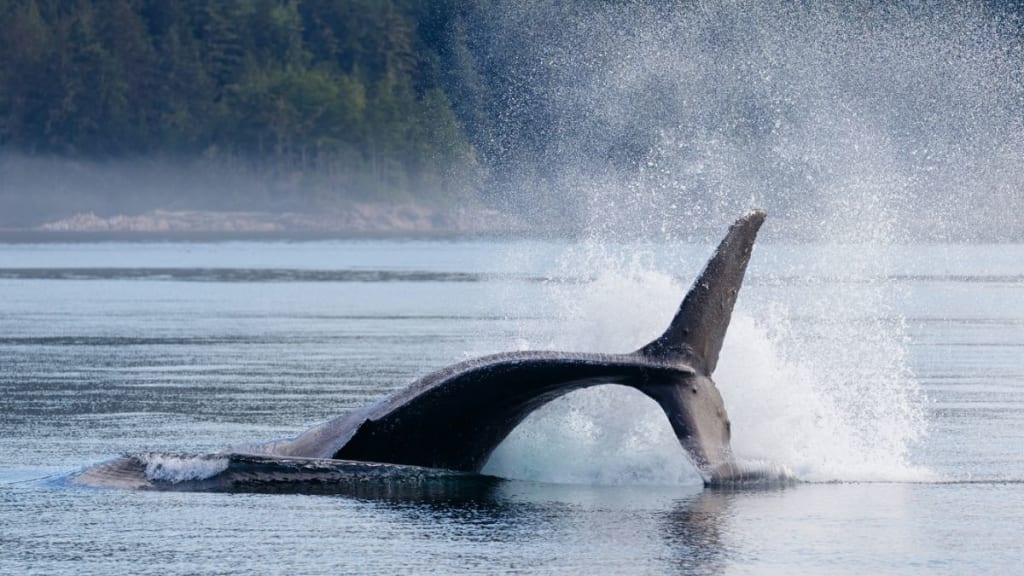
The main whale watching season in Ucluelet usually runs from spring through fall, with different whales more likely at different times.
March to May is the classic gray whale migration period. This is when Pacific gray whales travel north along the west coast of Vancouver Island after spending winter in warmer breeding lagoons farther south. The Pacific Rim Whale Festival also happens in March and celebrates the return of migrating gray whales to the coastal waters around Ucluelet, Tofino, and Pacific Rim National Park Reserve.
June to early summer can still be good for gray whales, and some may remain in the area to feed. Wildlife tours may also see sea lions, seals, eagles, and seabirds.
Mid-summer to September is often a strong time for humpback whales. Humpbacks may feed around Barkley Sound and nearby waters through much of the later summer season. This is also a popular time for visitors because the weather is generally warmer and tour schedules are active.
Fall can still bring whale activity, especially humpbacks, but weather becomes more variable and tour schedules may change later in the season.
Winter is not usually the main whale watching season in Ucluelet. The coast is better known then for storms, waves, moody ocean views, and birdwatching. Some wildlife may still be present, but regular whale watching tours are more common in the warmer months.
Month-by-Month Whale Watching Guide
Month | Whale Watching Notes |
February | Early gray whales may begin appearing along the west coast of Vancouver Island. Tour availability may be limited. |
March | Gray whale migration becomes a major highlight. Pacific Rim Whale Festival usually takes place this month. |
April | One of the best months for gray whale migration. Good time for spring whale watching. |
May | Gray whales may still be moving through, and some may stay to feed. |
June | Gray whales may still be around, and wildlife tours often include sea lions, seals, eagles, and seabirds. |
July | Humpback sightings become more likely as summer feeding activity builds. |
August | Strong month for humpbacks, with good chances for broader marine wildlife. |
September | Humpbacks may still be feeding in the area. Good late-summer or early-fall option. |
October | Whale sightings may still be possible, but weather and tour schedules become more variable. |
November to January | Not the main whale watching season. Better for storm watching, coastal walks, and winter wildlife viewing. |
Why Whales Come to Ucluelet
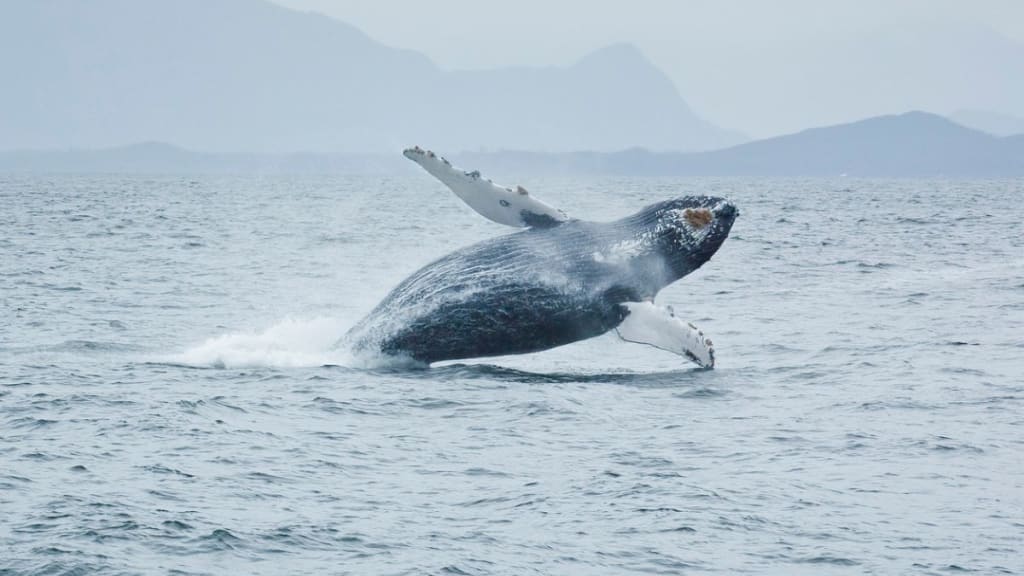
Whales come to the waters near Ucluelet because the area gives them what they need: migration routes, feeding grounds, and rich coastal habitat.
Ucluelet sits along the outer west coast of Vancouver Island, close to Barkley Sound and the open Pacific. This part of the coast is full of life because ocean currents, rocky islands, kelp beds, and nutrient-rich water support many small marine animals. These small animals support fish, seabirds, sea lions, seals, and whales.
Gray whales are strongly tied to migration. Each spring, many travel north along the Pacific coast after spending winter in warmer waters farther south.
As they pass Vancouver Island, some move close enough to shore that Ucluelet becomes a good place to watch them. Some gray whales may also feed in the area instead of continuing straight north.
Humpback whales come for food. They are often seen in summer and early fall, when feeding opportunities are strong.
Humpbacks follow prey such as small schooling fish and krill-like animals. If the food is present, the whales may stay in the area and feed.
Orcas come for a different reason. They are hunters, and their movements depend on food.
Some orcas may be looking for salmon, while others may be hunting marine mammals. This is why orcas can be seen near Ucluelet, but they are less predictable than gray whales or humpbacks.
What You Might See on a Ucluelet Whale Watching Tour
Gray Whales
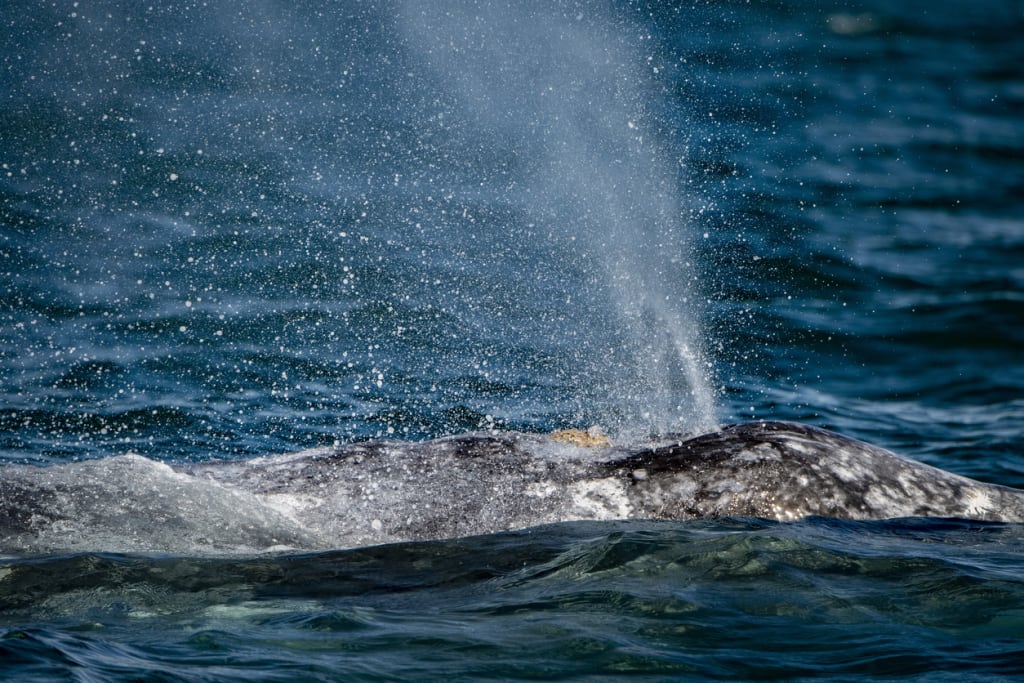
Gray whales are one of the most important whale species for Ucluelet. They are especially connected to the spring migration season.
They are not usually the most dramatic whales at the surface. They often show a low back, a small blow, and mottled gray skin. Instead of a tall dorsal fin, gray whales have a low ridge and small bumps along the back.
Gray whales may feed close to shore or in shallower areas. They are known for bottom-feeding, where they roll or scoop through sediment to find food.
Best clue: Look for a mottled gray back and a low, steady surfacing pattern.
Humpback Whales
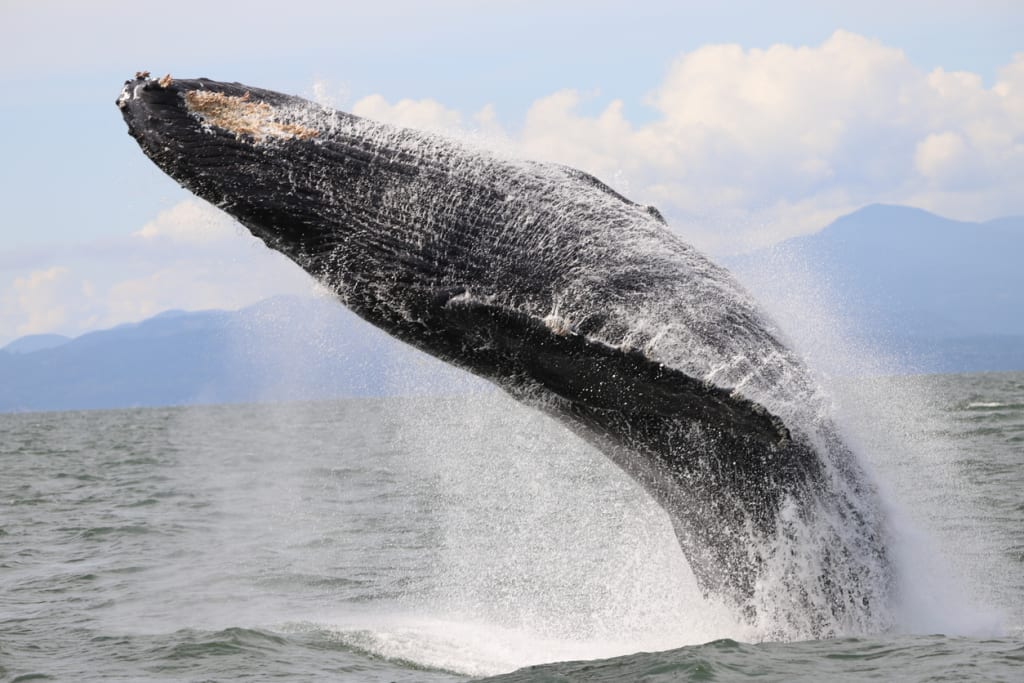
Humpback whales are often the stars of summer and early fall whale watching. They are larger and more dramatic at the surface than gray whales.
A humpback sighting may include a tall blow, a rounded back, a small dorsal fin, and sometimes a raised tail fluke before a deeper dive. Humpbacks are also known for dramatic behaviors like breaching, tail slapping, pectoral fin slapping, and lunge feeding, though these are never guaranteed.
Humpbacks are feeding whales in this region, so tours may see them traveling, diving, or working an area where food is present.
Best clue: Look for a tall blow, dark back, small dorsal fin, and a tail fluke before a deep dive.
Orcas
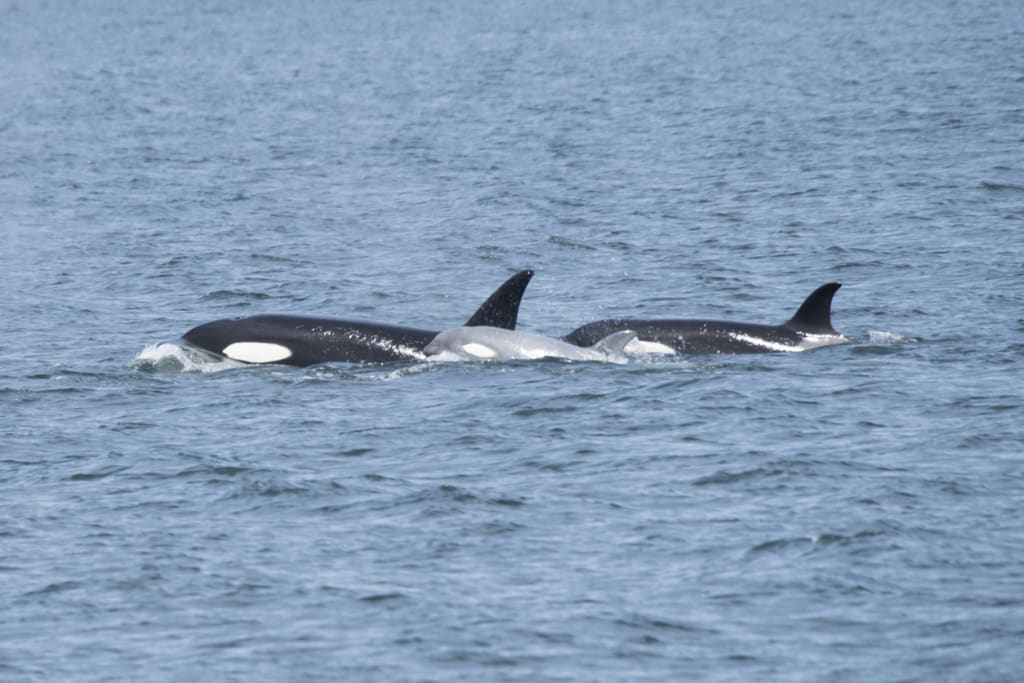
Orcas can appear near Ucluelet, but they are not as predictable as gray whales or humpbacks. They are usually moving with purpose because they are hunting or traveling.
Orcas are easier to recognize than many whales because of their black-and-white bodies and tall dorsal fins. Male orcas have especially tall, straight dorsal fins. Females and younger orcas have smaller, curved fins.
A sighting may be brief if the whales are moving quickly through the area.
Best clue: Look for a tall black dorsal fin and black-and-white coloring.
Final Thoughts
Whale watching in Ucluelet is not only about seeing a whale jump out of the water. It is about learning how to read the ocean.
A blow in the distance, a dark back rolling through the water, a tail fluke before a deep dive, birds gathering over baitfish, or a sea lion colony on the rocks can all be part of the story.
Ucluelet is special because whales come here for real reasons: migration, food, and rich coastal habitat. If you visit with patience and curiosity, even a brief sighting can become unforgettable.